Categoria

Multilateralism & Unilateralism

Multilateralism & Unilateralism

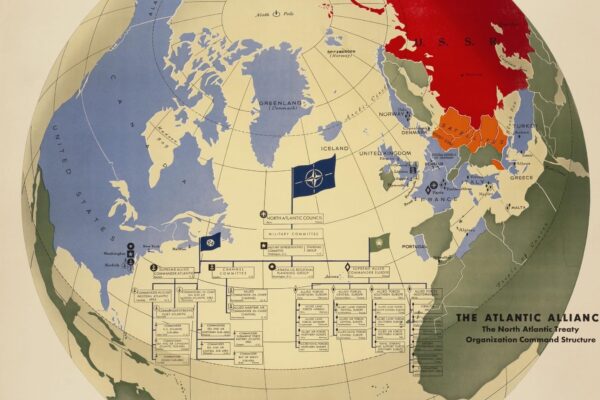
An Open Letter to NATO: The False Promise of Militarized Security

NATO members spend over $1.3 trillion annually on military expenses while ignoring root causes of conflict like inequality and resource scarcity. The article argues that investing in healthcare, education, and international cooperation frameworks would generate greater security and economic growth than military spending.

Multilateralism & Unilateralism

US at 250: A time to return to the founders’ wisdom

On the 250th anniversary of American independence, scholar Jeffrey Sachs argues the US should return to founding principles of respecting global opinion, avoiding entangling alliances, and practicing mutual noninterference—rather than pursuing imperial interventions that have defined much of US foreign policy.

Multilateralism & Unilateralism

How the US-Iran fight in the Strait of Hormuz can be resolved before it blows up the MOU

The U.S. and Iran have escalated military confrontations over competing interpretations of their Memorandum of Understanding regarding Strait of Hormuz transit, with Tehran demanding vessel coordination while Washington rejects exclusive Iranian control, risking the broader agreement if a compromise requiring dual notification to Iran and Gulf states cannot be revived.

Multilateralism & Unilateralism

Order Through Mutilation

The article argues that Western military pressure, sanctions, and inspection demands have failed to constrain Iran because they treat complex societies as mechanical systems to be controlled rather than adaptive political ecosystems. This “structural stupidity” backfires when coercion strengthens Iranian resilience and regional networks, ultimately revealing the limits of unilateral hegemony in an interconnected world.

Multilateralism & Unilateralism

Can the World Still Work Together?

By Ramesh Jaura* – rjaura.substack.com Hamburg and the Future of International Cooperation “The United Nations was not created to take mankind to heaven, but to save humanity from hell.” – — Dag Hammarskjöld Eighty years after the founding of the United Nations, the…

Multilateralism & Unilateralism

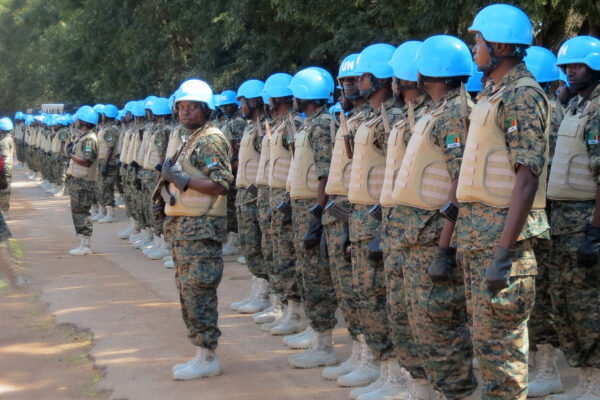
Africa’s Security at a Crossroads

Africa has shifted from the geopolitical margins to a central position amid global power competition, possessing critical minerals and strategic importance. However, this growing significance coincides with a fragmented international system, weakened multilateral institutions, and increasingly complex overlapping security crises requiring stronger African institutional capacity.

Multilateralism & Unilateralism

Trump should foot the bill for rebuilding Venezuela after earthquake disaster

Devastating earthquakes struck Venezuela on June 24, killing at least 1,450 people, compounding a crisis worsened by U.S. sanctions and a January 2026 U.S. invasion that removed President Nicolás Maduro. The article argues the U.S. should lift sanctions and fund reconstruction given its role in destabilizing the country.

Multilateralism & Unilateralism

When did Western statecraft lose its fear of the unknown? 

Western leaders are escalating pressure on Russia through Ukrainian deep strikes into Russian territory while lacking Cold War-era safeguards and clear escalation controls, risking unintended broader conflict as Moscow’s calculated restraint may eventually shift to European targets.

Multilateralism & Unilateralism

Rebranding French imperialism

France hosted the Africa Forward Summit in Kenya to rebrand its declining influence across the continent after losing military and economic control in West Africa, while presenting itself as an equal partner despite historical extraction patterns that benefit foreign capital over African interests.

Human Rights

EU’s Taliban talks crack the facade of a principled policy

The European Union hosted Taliban representatives in Brussels for technical talks on migration and asylum returns, marking the first EU-hosted engagement with the group since 2021. Rights organizations warned that deportation cooperation risks legitimizing the Taliban regime amid severe restrictions on Afghan women and girls.