
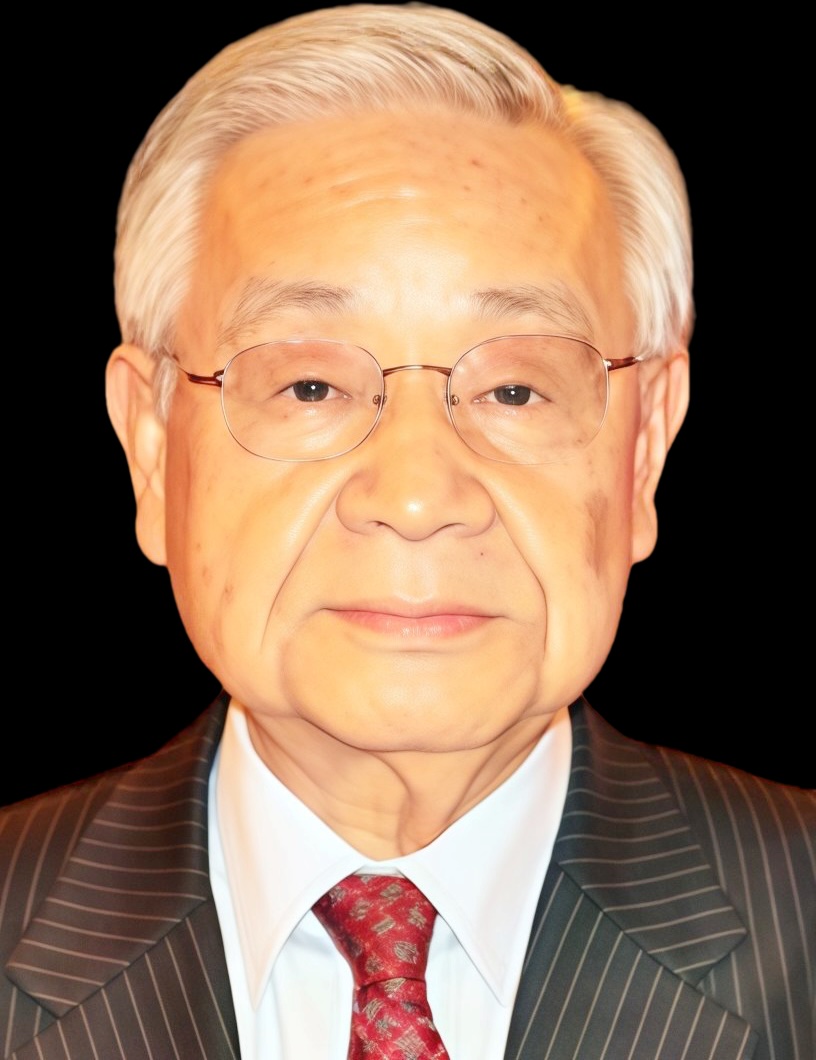
DEVNET JAPAN Board Member – Juro Nakagawa
 “CHINDIA” is a theory I developed during my time as a trading company executive and university professor. It posits that the first half of the 21st century will be the “Age of China,” while the second half will be the “Age of India,” and therefore, Japan should prioritize both China and India in its international economic and trade strategies.
The objective circumstances supporting this theory are becoming clearer with each passing year.
India surpassed China in 2023 to become the world’s most populous nation. With a median age in the late 20s, it will enjoy a “demographic dividend”—an abundant labor force and a massive consumer market—for decades to come. Its gross domestic product (GDP) has already surpassed that of the United Kingdom to rank among the world’s top five, and it is widely expected to overtake Japan and Germany in the near future to become the world’s third-largest economy. In contrast to the Chinese economy, which is showing signs of slowing due to a real estate slump and population decline, India continues to grow at a high rate of 6–7% annually, and the center of gravity of “CHINDIA” is indeed shifting toward INDIA as we move into the second half of the century.
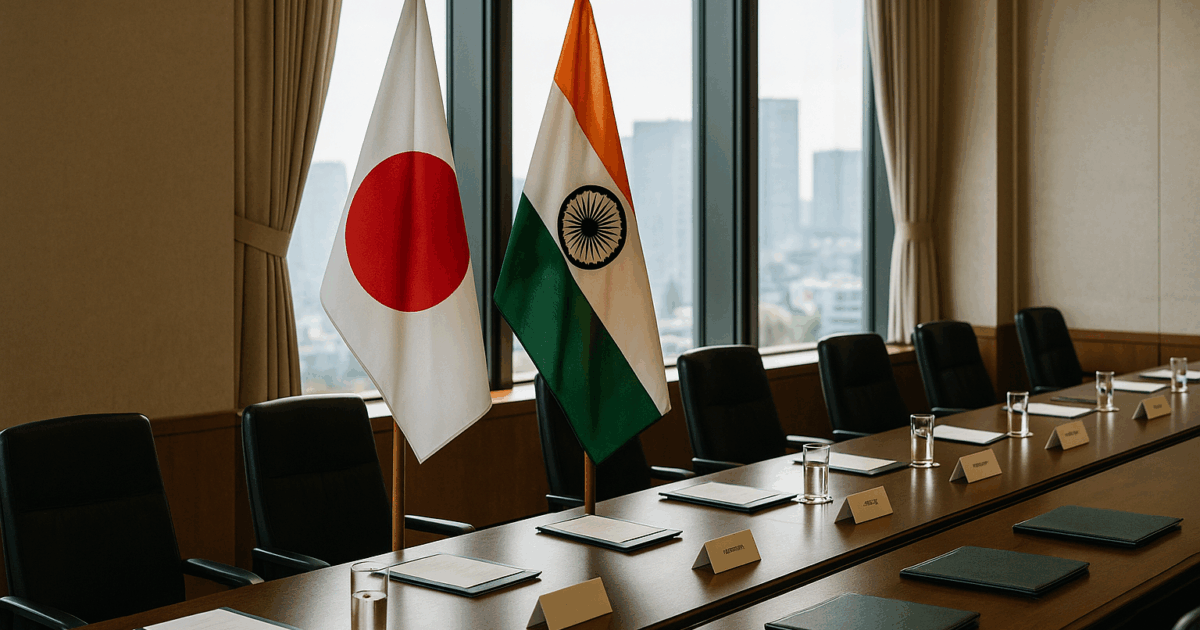
Against this backdrop, on July 2, Prime Minister Sanae Takaichi visited New Delhi for her first summit meeting with Prime Minister Modi. This was the first visit by a Japanese prime minister to India since 2023, coinciding with the 75th anniversary of the establishment of diplomatic relations between Japan and India. The talks lasted approximately 90 minutes, during which the two leaders confirmed that Japan’s evolved “Free and Open Indo-Pacific (FOIP)” and India’s “MAHASAGAR” initiative are aligned under the “Special Strategic Global Partnership,” and agreed to deepen strategic cooperation. Notably, more than 150 Japanese companies accompanied the Prime Minister on this visit, and 129 cooperation agreements were signed at the Japan-India Economic Forum. Of the 10 trillion yen target for private-sector investment in India set last year, investments totaling 2 trillion yen have already been finalized (according to a Ministry of Foreign Affairs announcement and the Nikkei on July 3).
The highlight of these talks was the “Japan-India Joint Declaration on Economic Security Cooperation.” The two countries designated five priority areas—semiconductors; critical minerals such as rare earths; clean energy sources such as ammonia; information and communications technology, including undersea cables; and pharmaceuticals—with the aim of building supply chains that are not dependent on specific countries. With China’s tightening of rare earth export controls in mind, the two sides also shared serious concerns regarding economic coercion. In the energy sector, a new bilateral dialogue on strengthening India’s oil reserves will be established under the “Power Asia” framework, and Japan will support India’s participation in the International Energy Agency (IEA). The two countries will cooperate on the “Japan-India CBG Initiative” to support India’s goal of establishing 1,000 biogas plants. Furthermore, a joint statement was issued in the field of AI, incorporating joint research on large-scale language models and a talent exchange program to invite 500 highly skilled professionals from India to Japan by 2030. On the security front, both sides agreed to hold a “2+2” ministerial meeting between foreign and defense ministers within the year and to promote cooperation on defense equipment and naval vessel maintenance.
The importance of the Shinkansen project—a flagship of Japan-India cooperation—was also reaffirmed. The high-speed rail line between Mumbai and Ahmedabad in western India is a flagship project extending into the state of Gujarat, Prime Minister Modi’s home state, and both sides confirmed their continued cooperation toward the introduction of the state-of-the-art E10 series Shinkansen trains.
Approximately 80 percent of the project’s 1.8 trillion yen cost will be covered by Japanese Official Development Assistance (ODA) yen loans. The Indian government has a plan to develop a 7,000-kilometer high-speed rail network nationwide, which could open up a vast follow-on market for Japanese companies leading the way in Shinkansen technology.
That said, we cannot speak of the arrival of the “Age of India” with unbridled optimism. To be fair, I would like to point out three structural weaknesses facing the Indian economy. The first is growth without employment. India’s growth is skewed toward capital- and knowledge-intensive sectors such as IT services, while labor-incremental manufacturing—which should be absorbing the labor force that grows by about 10 million people each year—has not developed adequately. Despite the “Make in India” initiative, manufacturing’s share of GDP has stagnated at around 15%, and the female labor force participation rate remains the lowest among major economies. If India cannot generate jobs, its demographic dividend risks turning into a “demographic liability” in the form of a massive underemployed population. Second is the country’s dependence on foreign energy and resources. India relies on imports for more than 85% of its crude oil and was one of the countries hardest hit by recent maritime security instabilities. The more the economy grows, the more energy imports expand, and the structural reality—in which the current account balance and the Indian rupee are at the mercy of crude oil prices—is unlikely to change for the foreseeable future. Third is the constraints posed by human capital and natural conditions. While there is a large pool of highly educated elites, the base of basic education and vocational skills is narrow, causing the majority of the workforce to remain stuck in low-productivity sectors. Furthermore, climate risks—such as the depletion of groundwater, increasingly severe heatwaves, and the instability of the monsoon—directly impact both agriculture, in which over 40 percent of the population is engaged, and urban infrastructure. There are also significant disparities in systems and development levels between states, and the image of India as “one giant market” often precedes reality.
However, viewed from another perspective, the recent Japan-India agreement directly addresses these very weaknesses. Investment in semiconductors and manufacturing cooperation will contribute to job creation; dialogue on oil reserves, support for IEA participation, and the 1,000-biogas-plant initiative will help overcome energy vulnerabilities; and the exchange of 500 highly skilled professionals, along with collaboration among industry, government, and academia, will help raise the level of human capital. India’s weaknesses are nothing less than opportunities for Japanese cooperation, and the “mutually complementary” structure—combining India’s young talent and digital capabilities with Japan’s manufacturing technology and capital—gains even greater significance amid the turbulent international situation, just as Prime Minister Takaichi herself stated: “By leveraging each other’s strengths, we will become stronger and more prosperous together.” The “Age of India” will not arrive automatically; it depends on the success or failure of investments aimed at overcoming these challenges—in that sense, this series of agreements represents a concrete response to the demands of the times.
As someone who stood on the front lines of Japan-India trade for five years in the 1970s as the head of a trading company’s New Delhi branch, I am deeply moved to see that, half a century later, Japan-India relations have reached such a multifaceted stage. The groundwork for the latter half of the “CHINDIA” century—that is, the “Age of India”—is being laid right now. I sincerely hope that the economic and friendly relations between Japan and India will deepen even further.